Media kit
Dear members of the media, please find media materials for the Arik Weissman exhibition. If you have any questions or would like to speak to the gallery or the artist, please contact us at guelmanundunbekannt@gmail.com


Mark Gisbourne about the exhibition
The idea that an artificial intelligence algorithm can evoke miserere mei (Psalter number 50 or 51), might seem perversely ironic and contradictory in the first instance. For the acclamatory ‘miserere’ is a biblical hymn and psalter-based evocation, a direct spiritual entreaty to God from a ‘broken-hearted’ supplicant, and seemingly antithetical to the concept of that suggested by the uses of the term artificial.
A noun that by definition is a situation or concept that does not exist within the natural world; that is to say contrived or false. Yet this said it can also be inferred by extension as an imagined human creation rather than occurring naturally, especially as a copy of something that might originally have been derived from the natural world—in other words a displaced pictorial or literary verbal or visual representation. With this basic premise in mind today’s uses of artificial intelligence goes far beyond the simple idea of mere mechanical algorithms, which is to say that which is commonly defined as a process or set of rules to be followed in calculation or other problem-solving operations, especially by a computer.
Two common forms of artificial intelligence are current in the view that computers today can engage with human-like thought processes. The two strains are called ‘Weak AI’ and ‘Strong AI’, the former is the creation of algorithms that can accomplish limited repetitive tasks with related capacities. Whereas Strong AI is intended to build mind machines that can think like humans, sometimes called Augmented Artificial Reality, and where in a supposed projected future will produce a new form of Super Intelligence that will replace the slower biological neurons of human consciousness. These machines will possess all the qualities of a human consciousness (have emotions and feelings) but function faster.
This use of an algorithmic AI generative approach has been latterly applied to art production, whereby a speculative algorithm with self-generated intentions has produced a series of inkjet painted images that are unique as to their eventual unforeseen outcome. It is this algorithmic approach that has been utilized by the AI artist Arik Weissman, in this instance using algorithmic information taken from the Miserere psalm. The computer-derived process has therefore followed an algorithmic exegesis of the contents of the petitioning spiritual hymn and translated it into an extended visual expression.
This has been achieved notwithstanding the conventional spatiality that is attached to pictorial representations, as against the familiar sung and time-based recitation of a spiritual text. But as we cannot follow the immediate and unpredictable potential of the self-generating algorithm that produced this series of large painted images, we can no longer understand them through traditional means of narrative iconography. We can no longer speak of overt or specifically derived influences and sources, but of the pre-existing contents and givenness of the world, the greater phenomenological information upon which the algorithm is based and as to what has been appropriated from it. For that which remains unknown and unknowable can never be reproduced—since nothing comes from nothing.
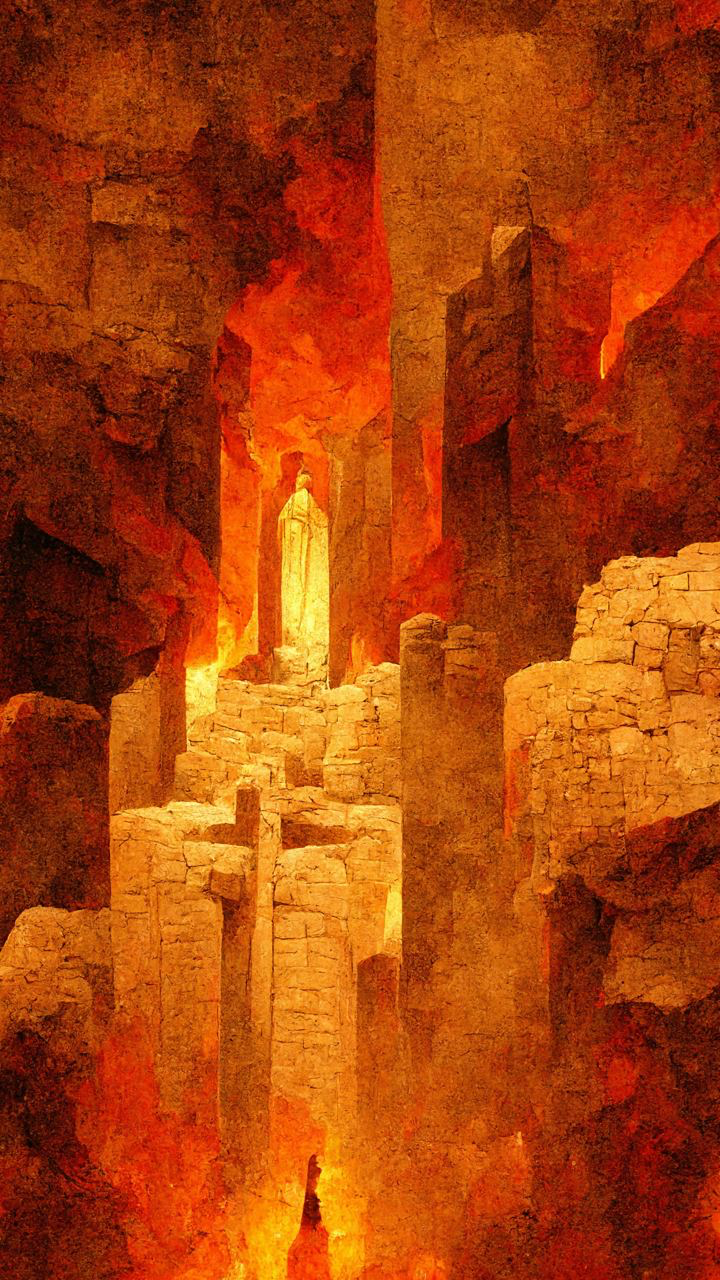
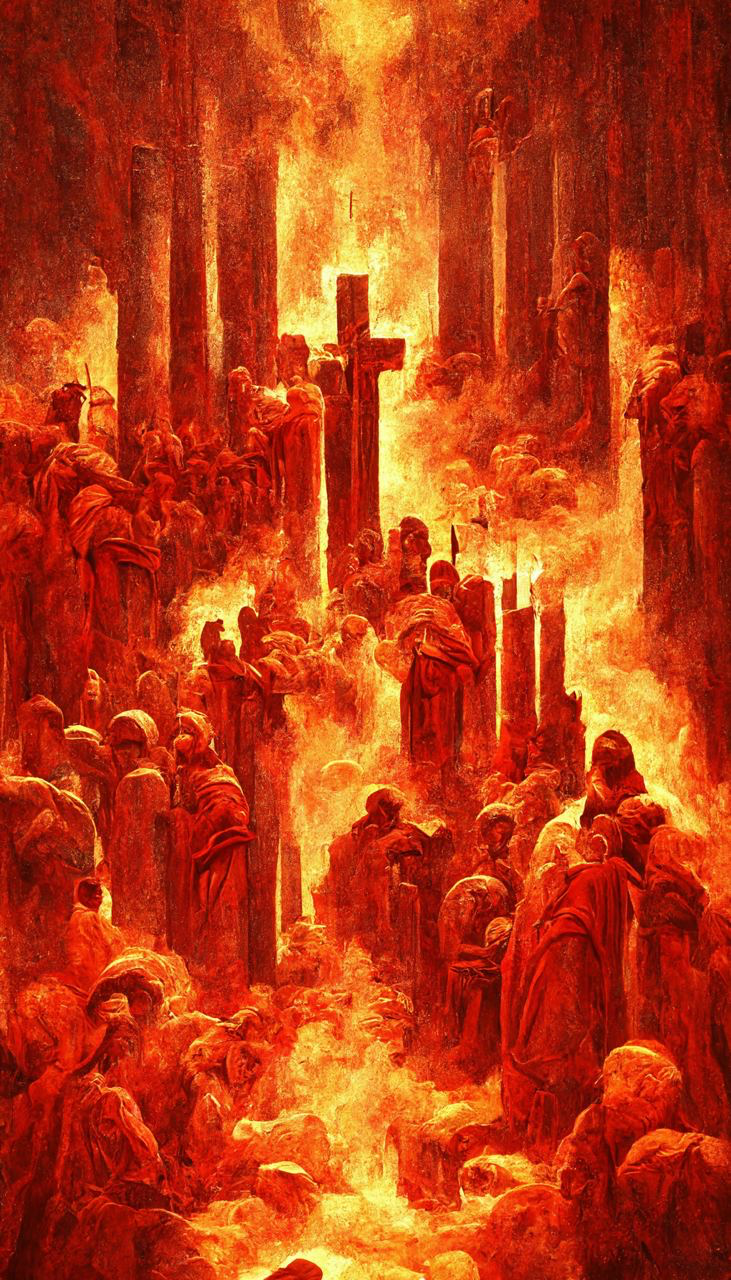
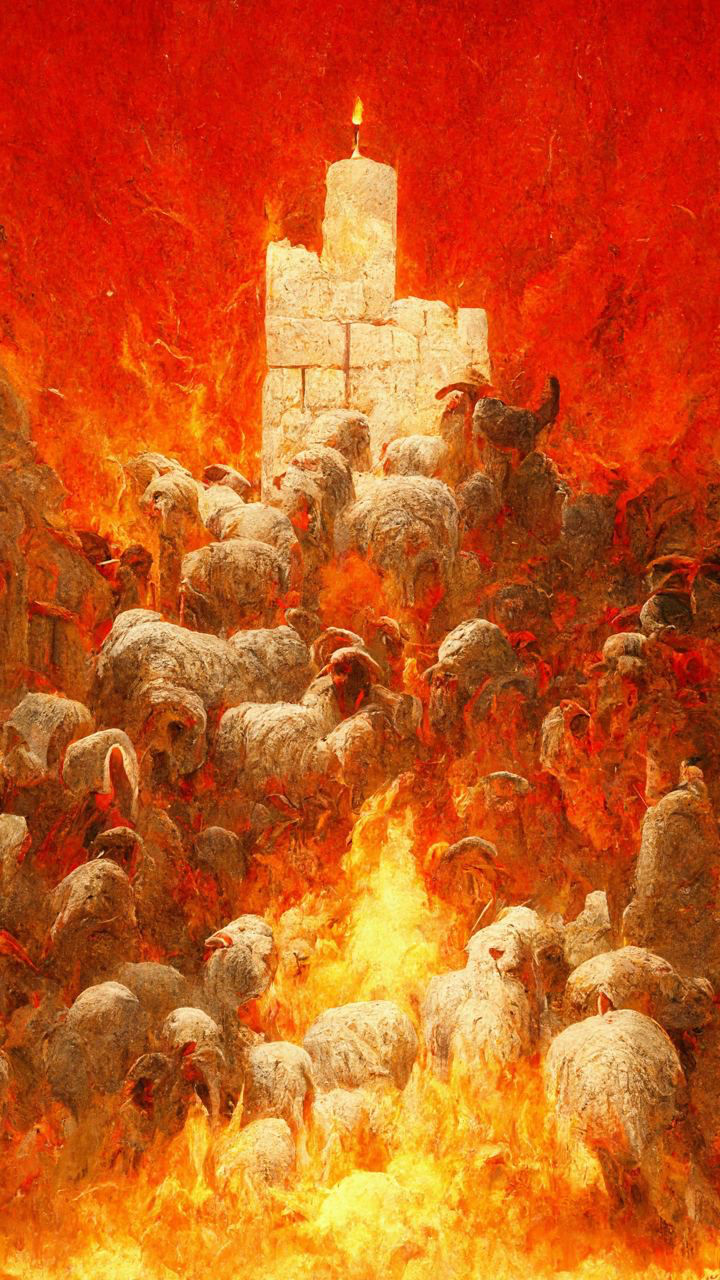
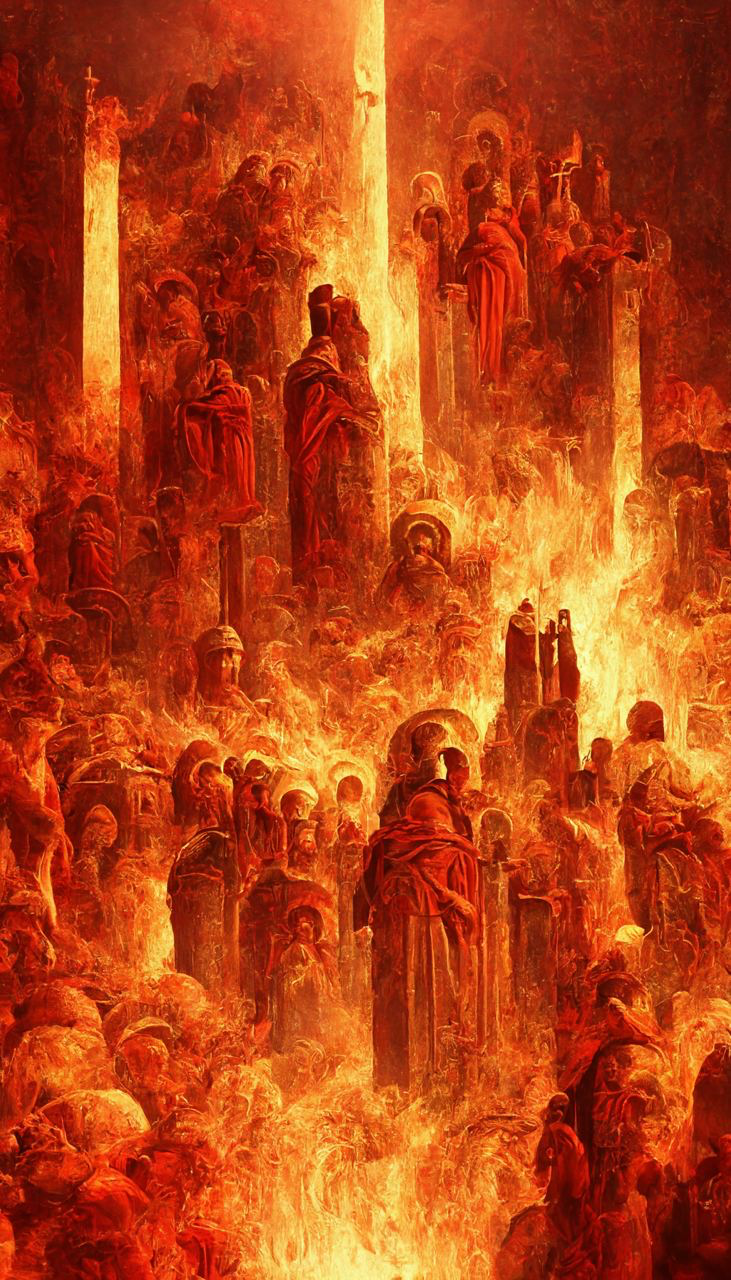
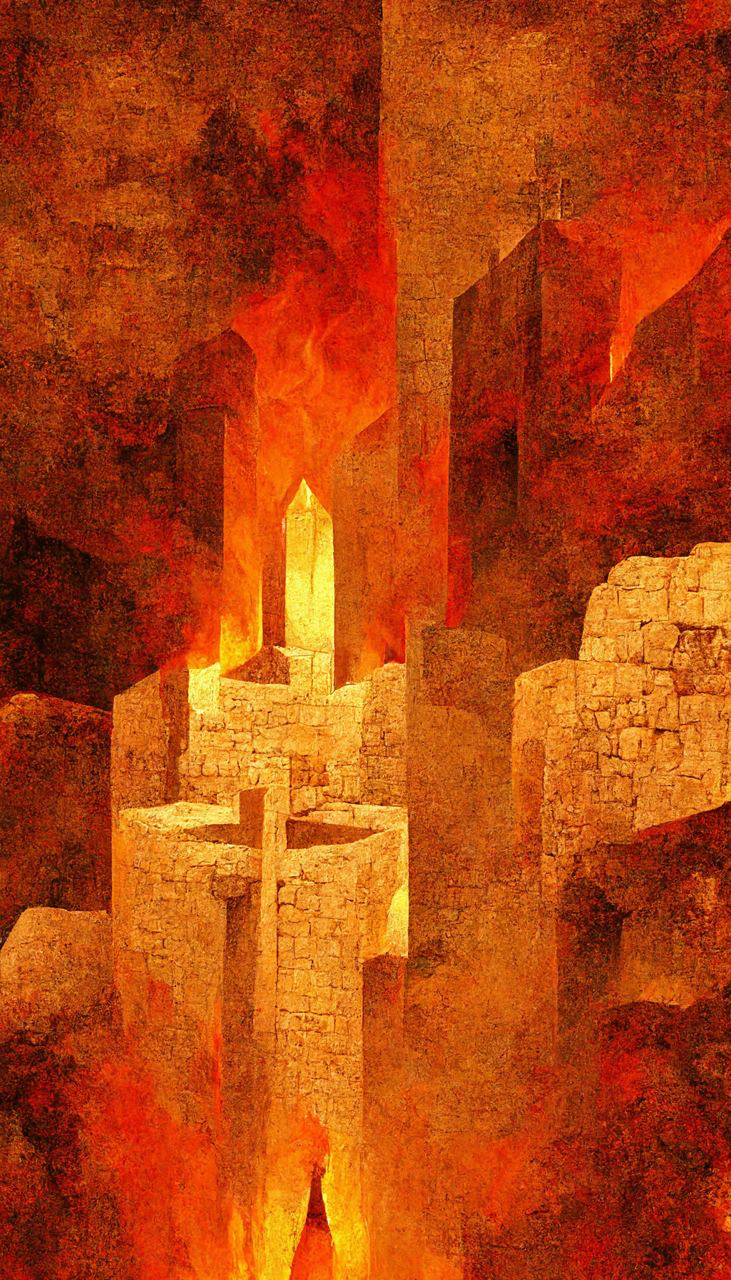
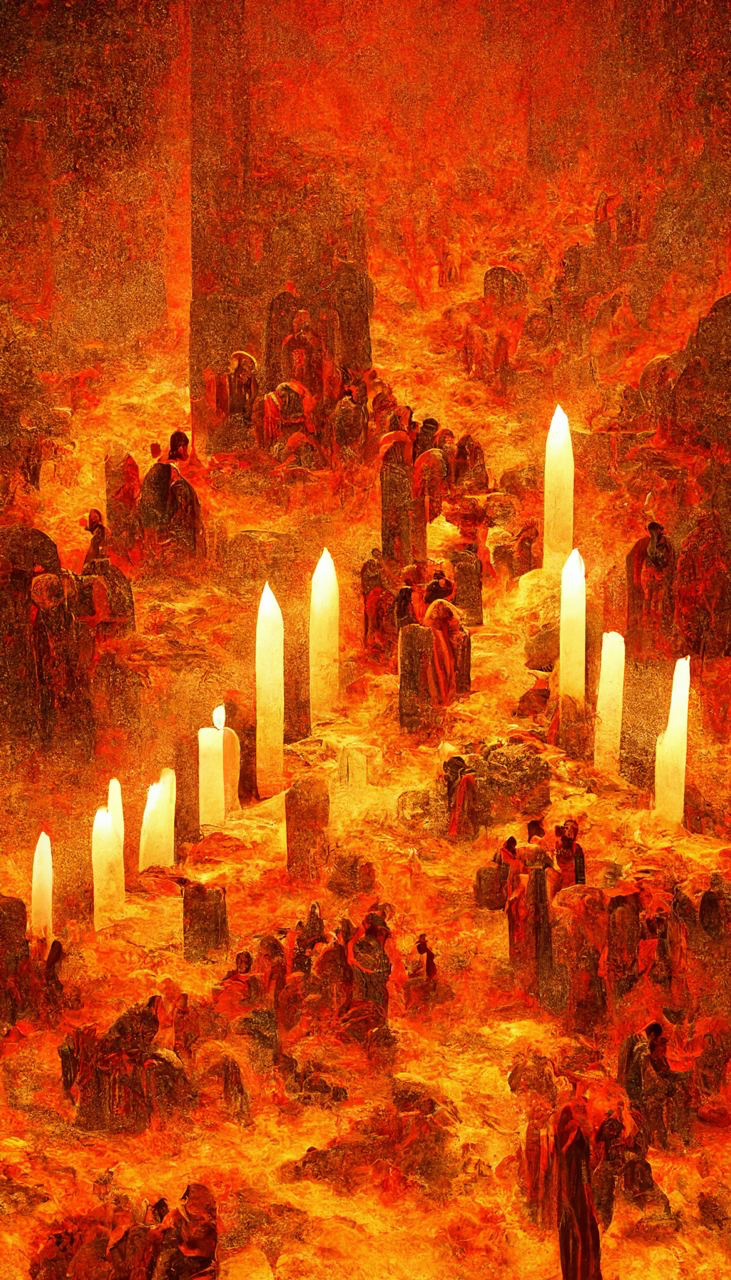
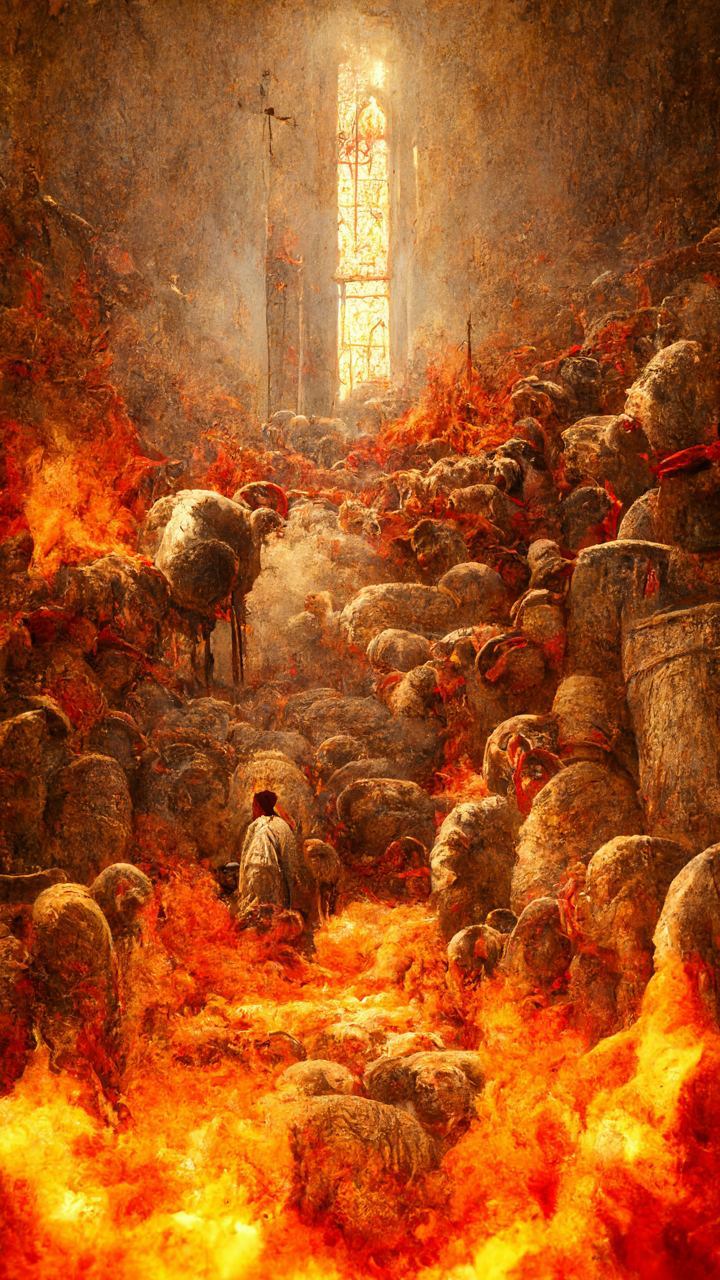
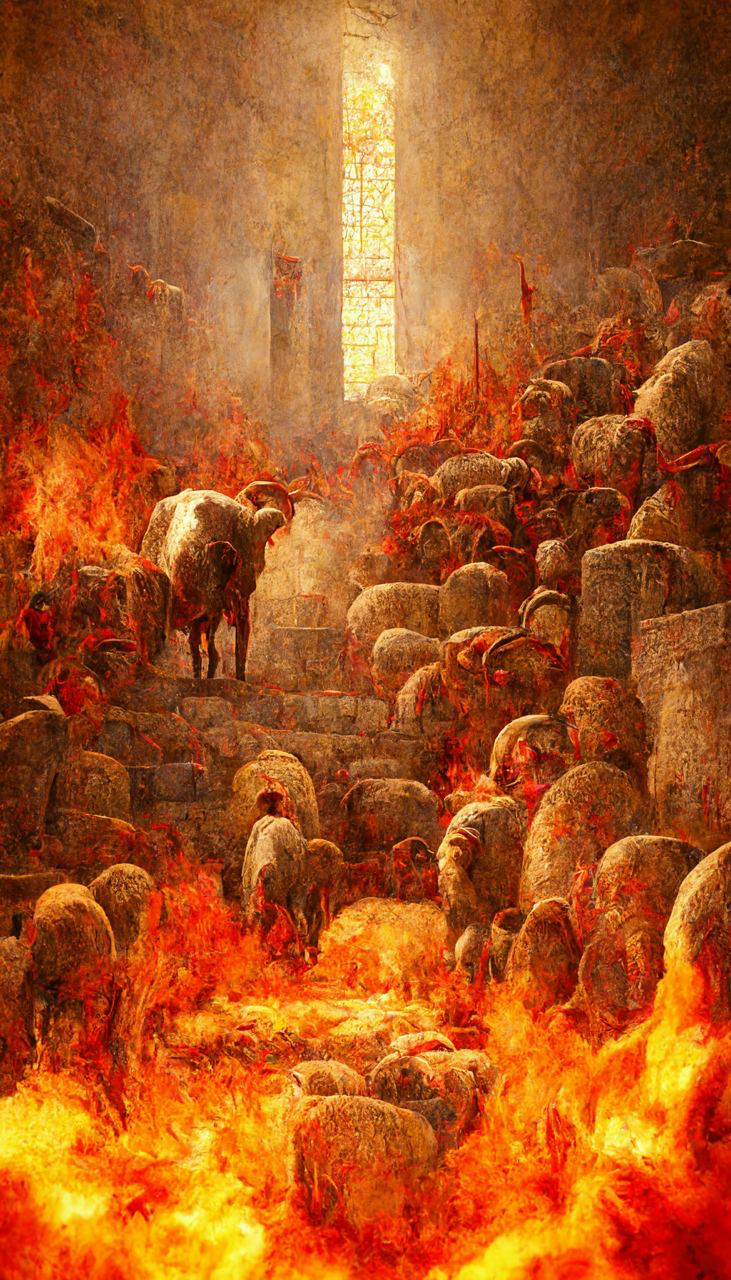
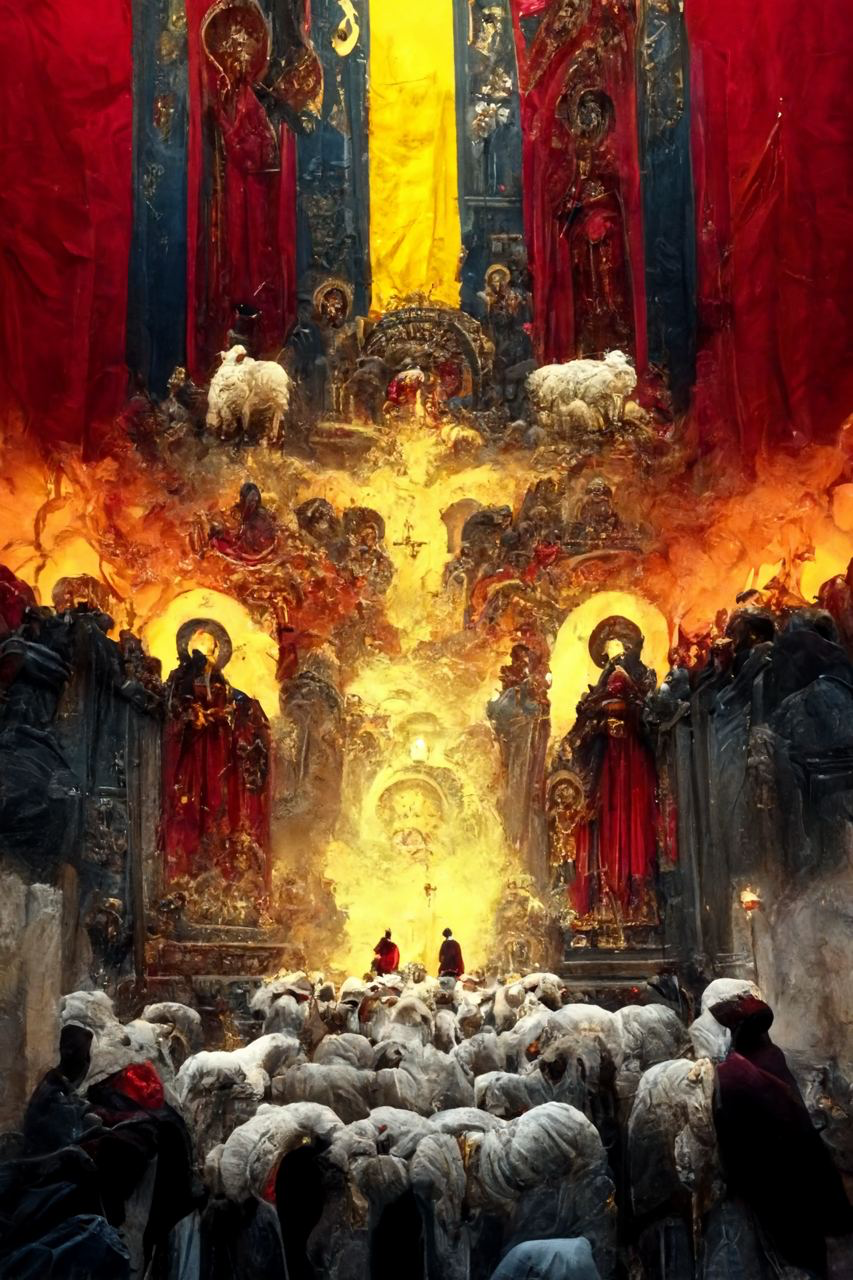
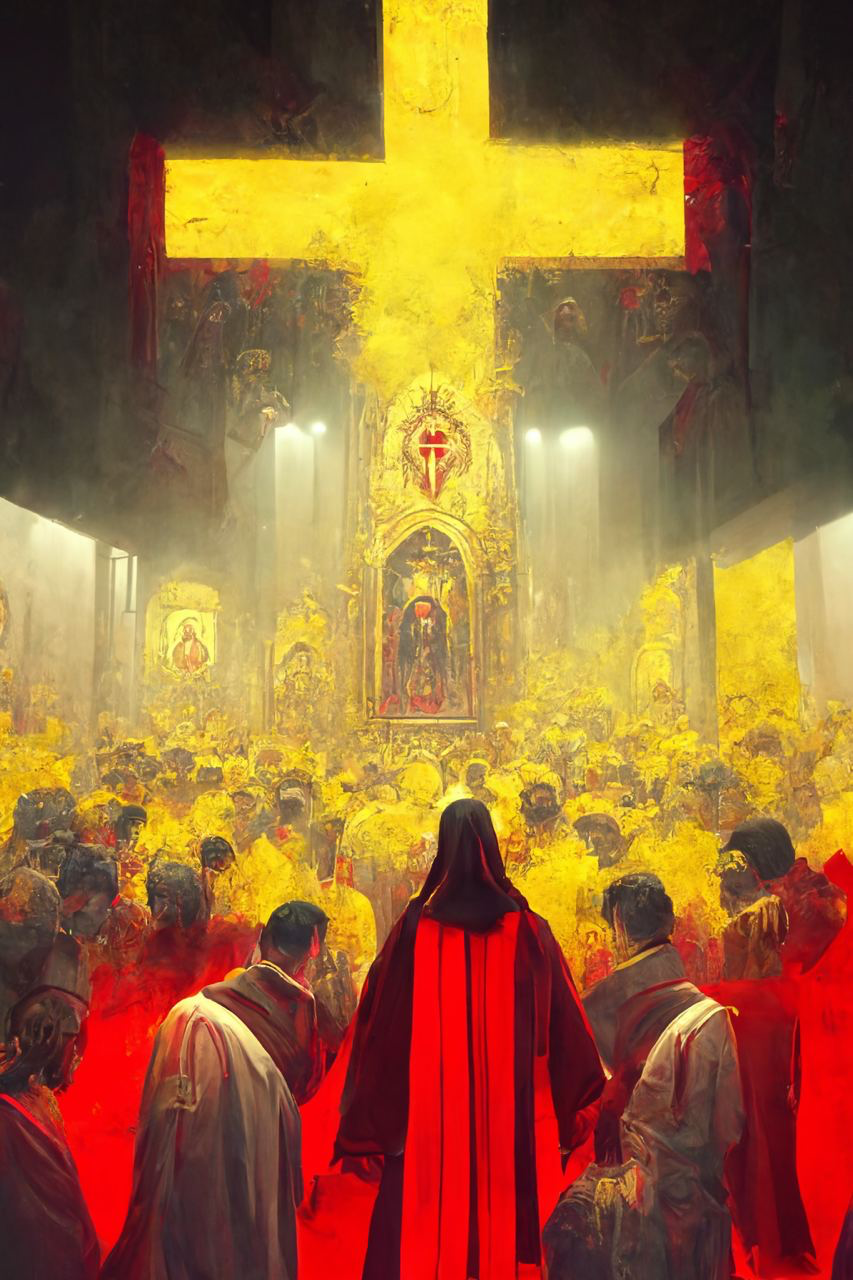
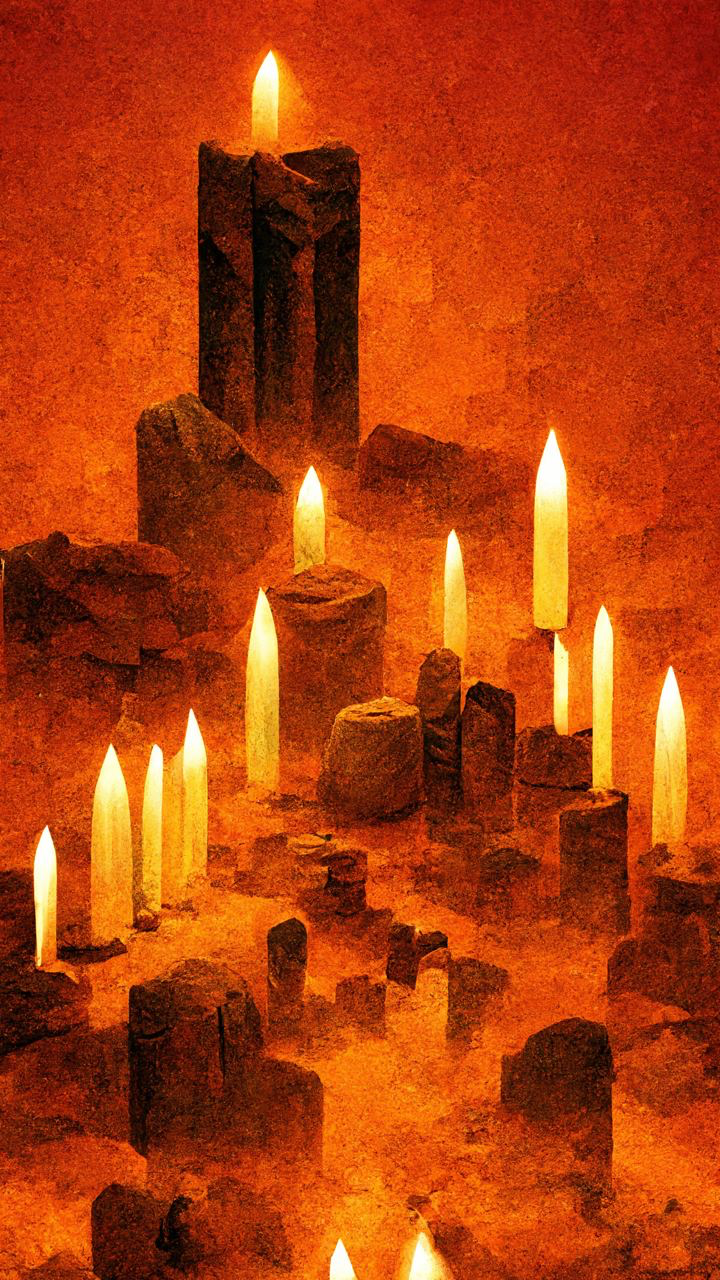
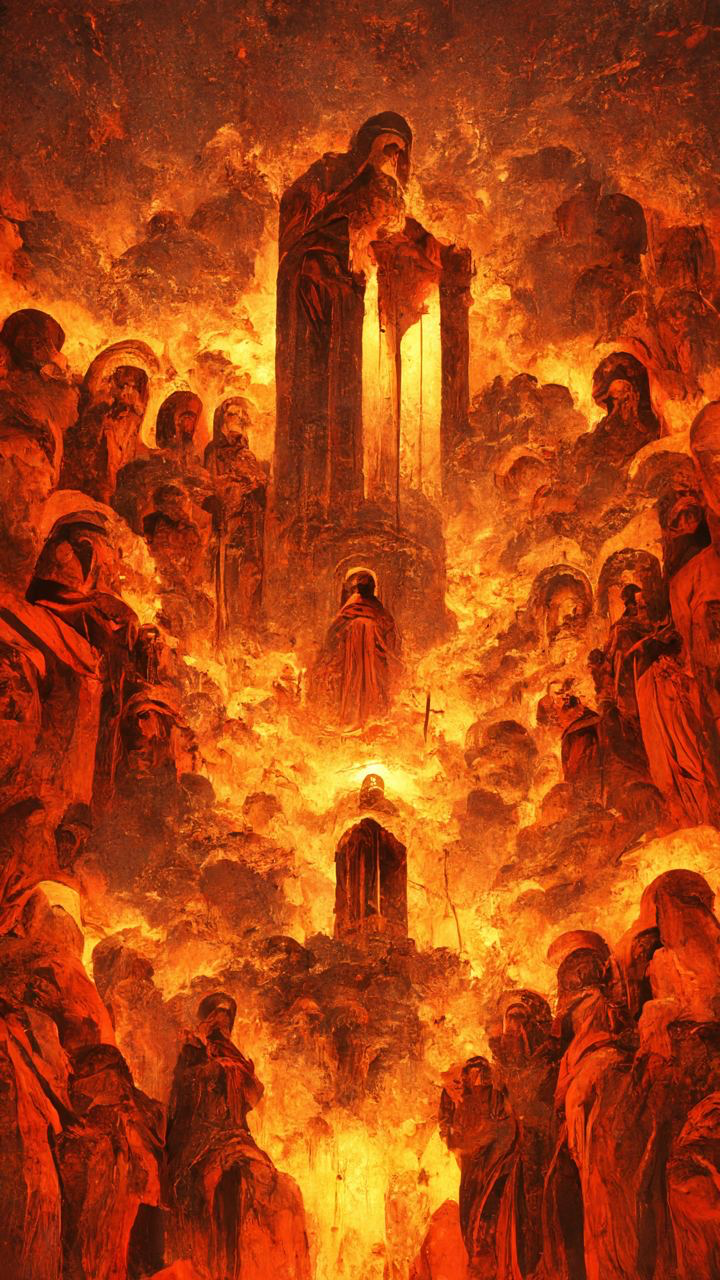
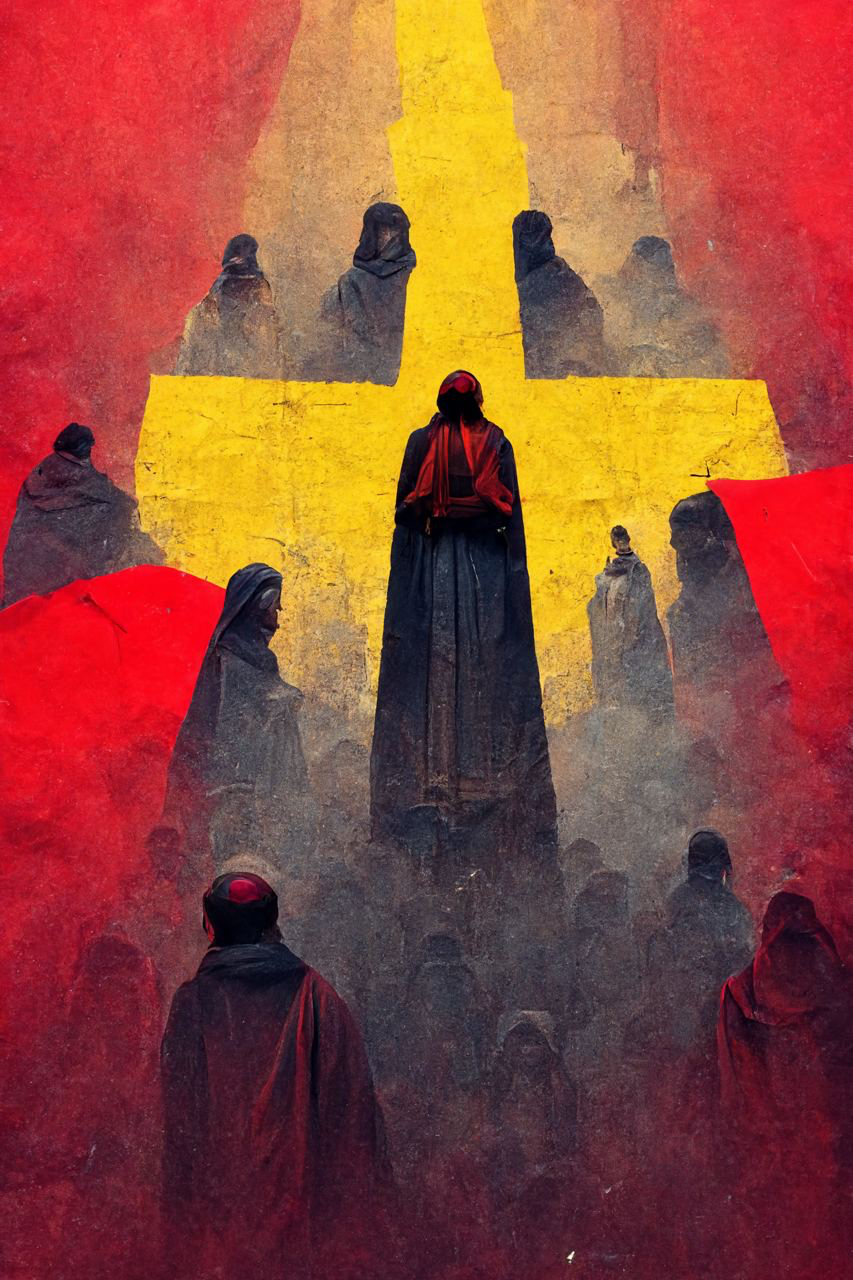
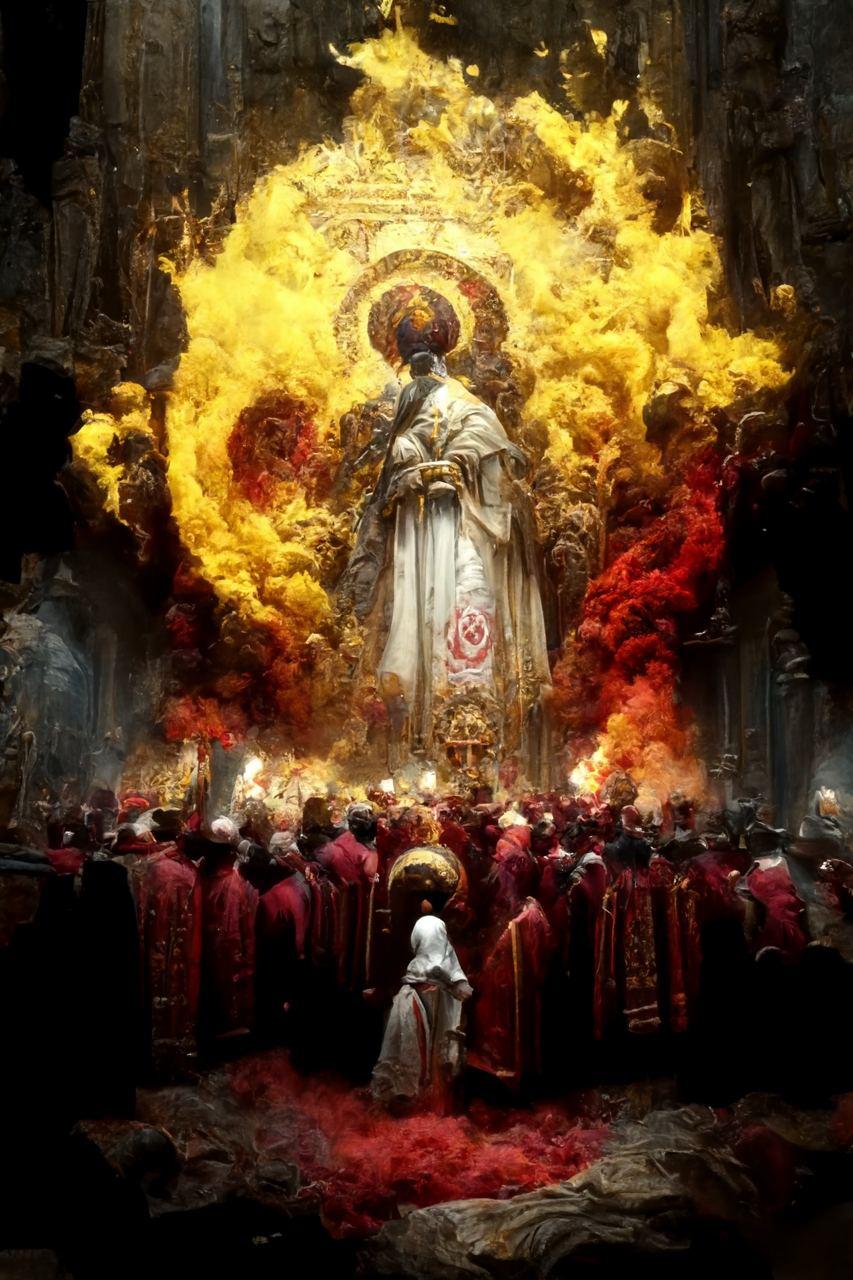
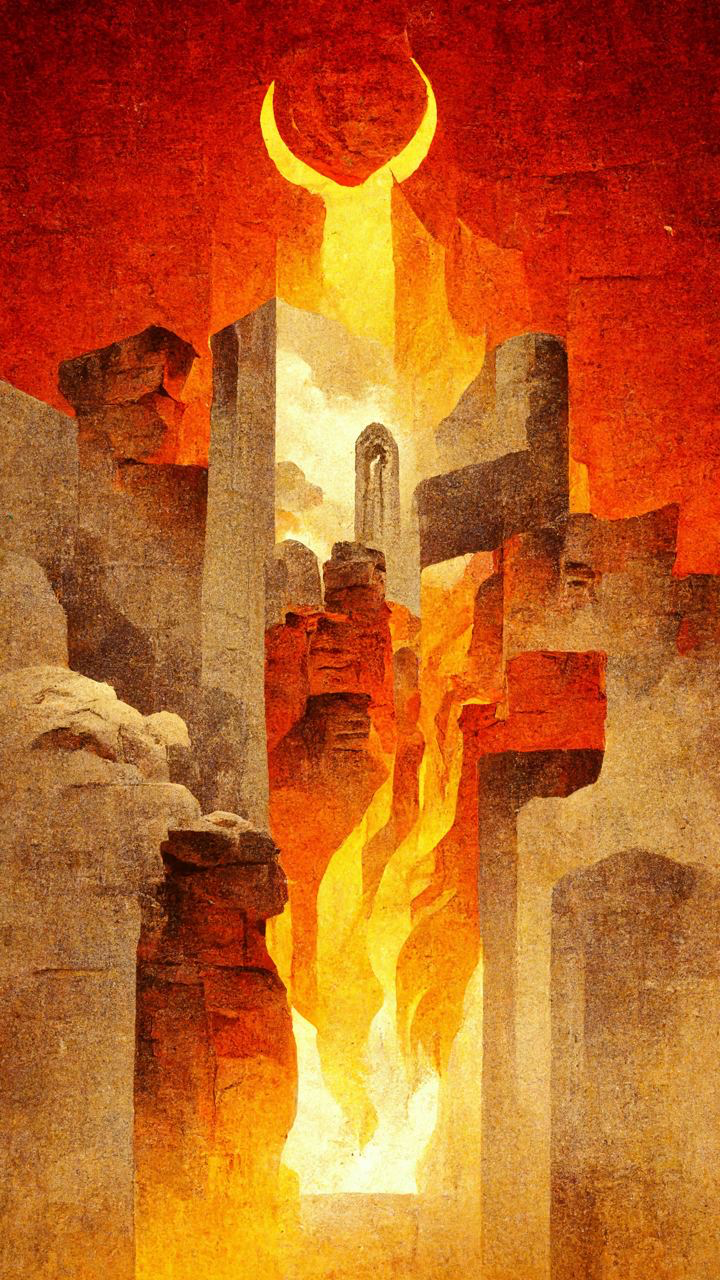
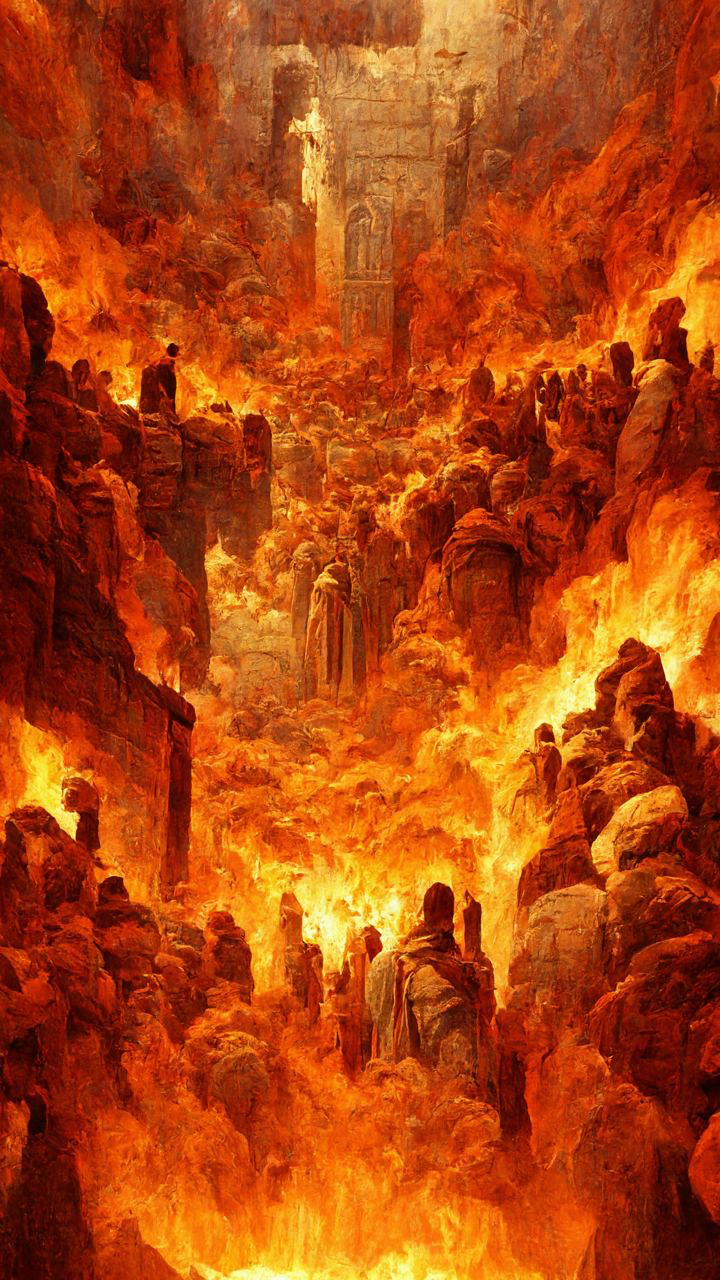
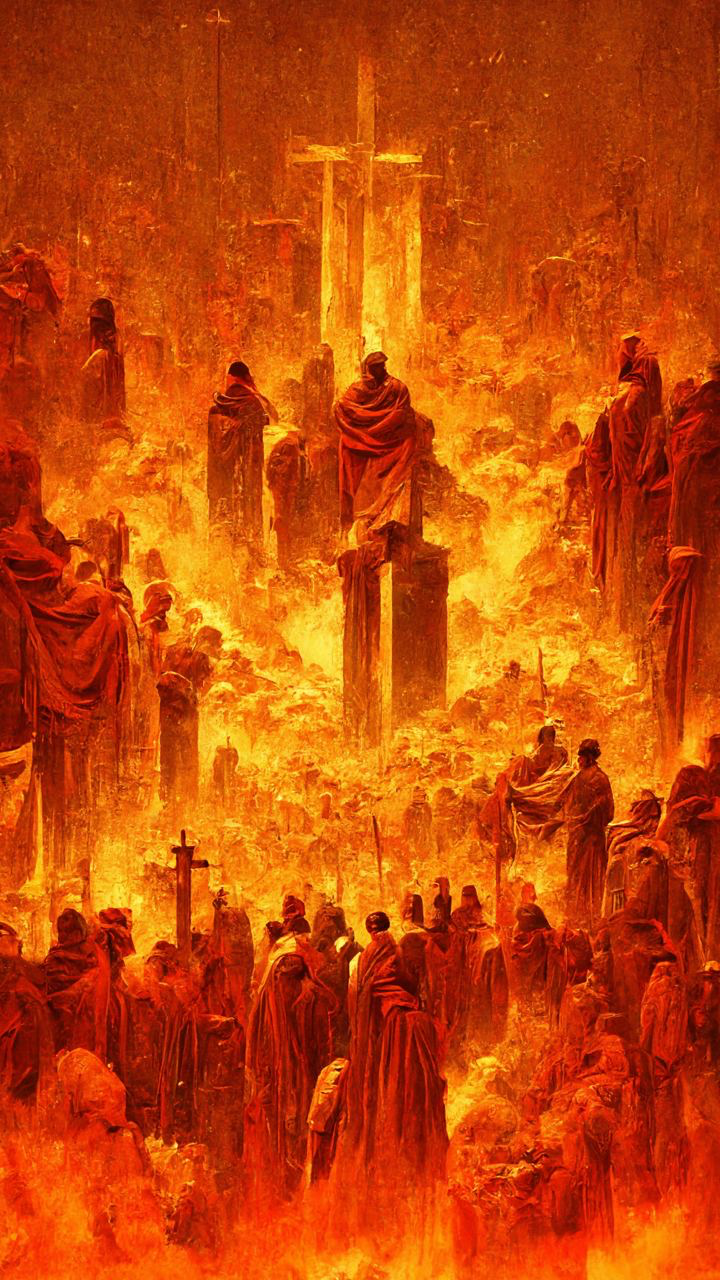
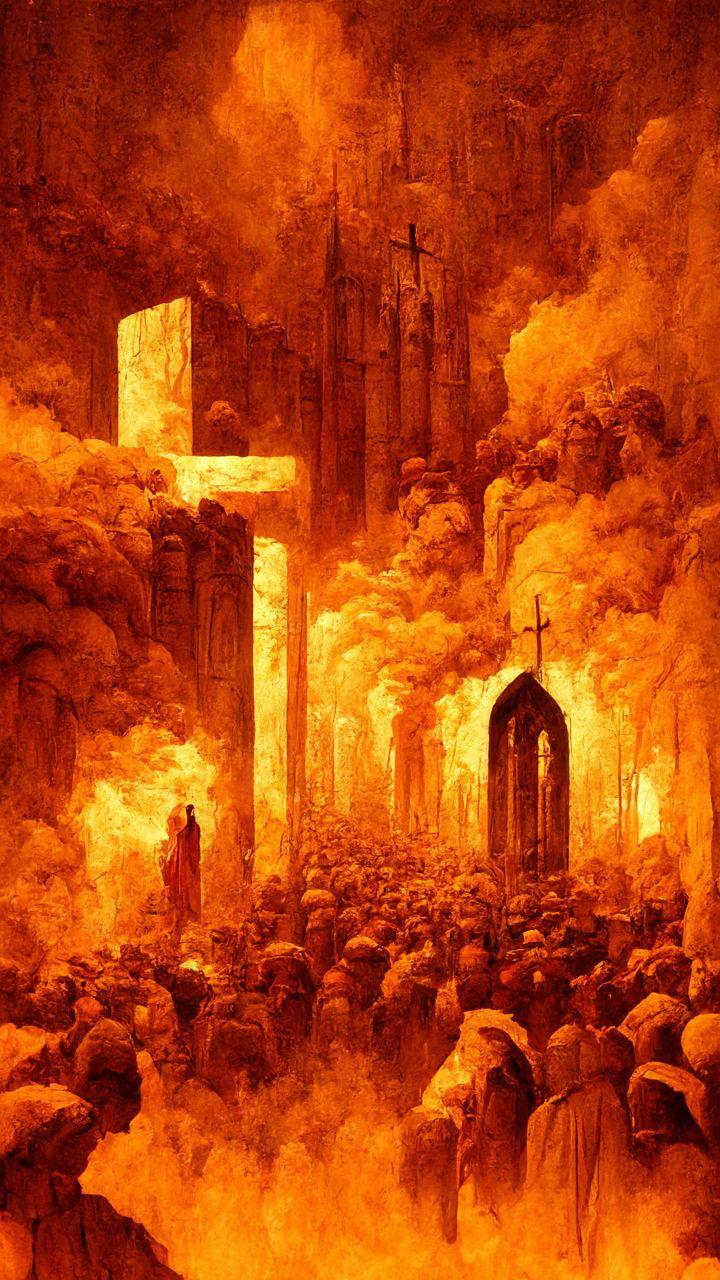
The subject contents of the series of the images realized through the use of the psalm algorithm presupposes of world of given data re-imagined as a new visual information source and potentially thereafter a unique form of machine created knowledge. An obvious aspect of these painted images is a predominant definition of colour with red-yellow-gold used throughout. This stands for a seemingly indirect penitential petition of address to the living Paraclete (Holy Spirit or Comforter) through the red uses of the liturgical raiment usually associated with Pentecost. In this respect colour represents a feeling of inferred poetic similitude, that is to say distinct from the at times figurative-abstract contents that appear across the various tableau.
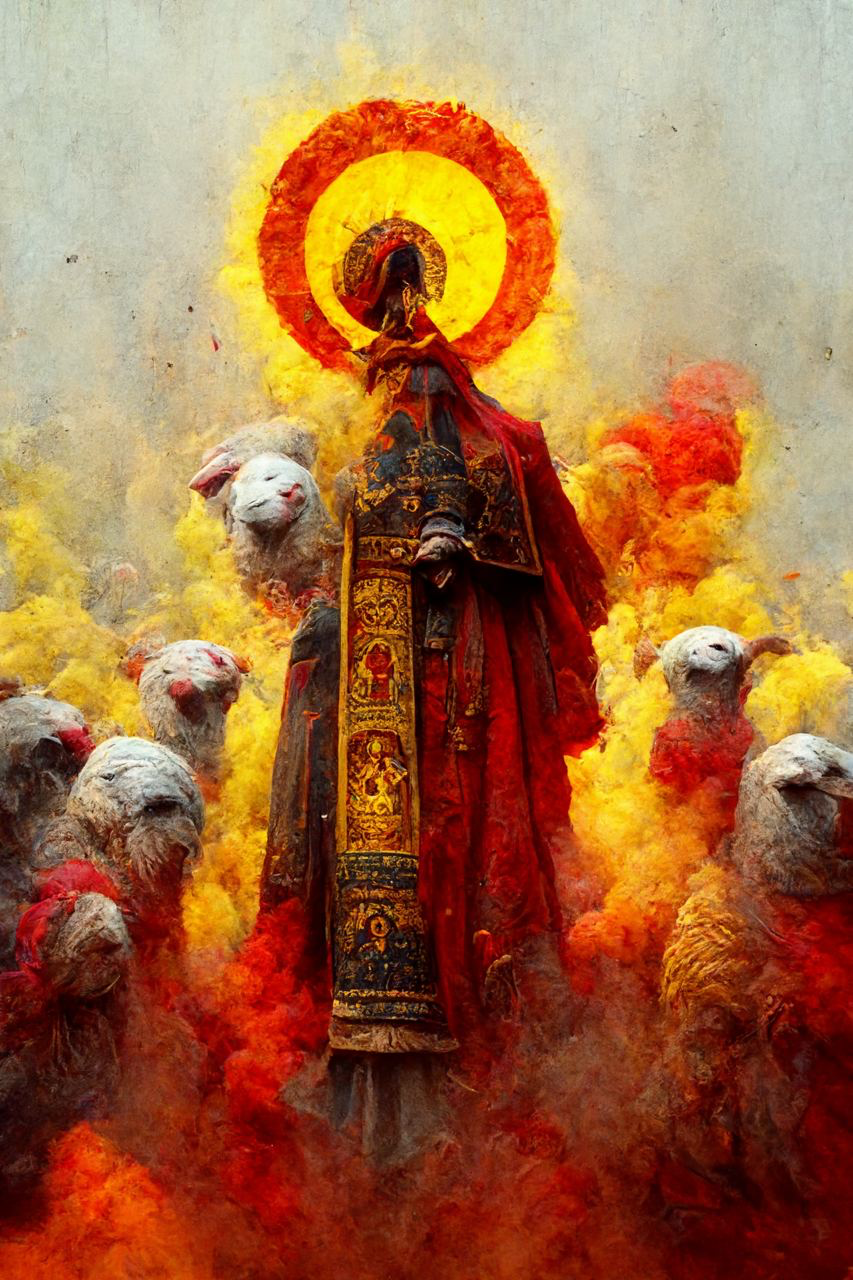
The use of vertical formats also denotes an inference of the spiritual and sidereal, and it follows on from this that the pictorial viewpoints are those of elevation, or, in religious terms positions of reverence. This said the imagery at the same time is consonant with depictions commonly associated with early nineteenth century biblical painted sources such John Martin’s Sadak in Search of the Waters of Oblivion (1812), a painting that attempted to blend science and fantasy at the time. That is to say imagery also reminiscent of the vivid colouristic parody appropriations of Komar and Melamid in the 1980s. A corona-Melchizedek (cohen or priest) figure also appears in a specific Weissman tableau, echoing the position of David as priest and king, and is shown in elevation surrounded by his spiritual flock. The theme of the flock and followers appears through many of the untitled tableau, visually stressing the contingencies of purification by fire and light. The allusion to fire suggesting purification in relation to penitence, whereas light and luminescence connote faith, “Then shalt thou be pleased with the sacrifices of righteousness, with burnt offering and whole burnt offering: then shall they offer bullocks upon thine altar (KJB, verse 19). Throughout the pictorial tableau there is a neo-romantic aspect of presentation, emphasis is placed on the diurnal moment, a sense of pictorial transition. We see images of the abyss and the void, passageways through fragmented and abraded architecture, Friedrich-like luminous windows of light, fiery crosses and levitating figures forms, and a sense of apocalyptic uncertainty. However in other instances we find signage works, where each motif is reduced to a skeletal drawings of stick figures, crosses that appear like old telegraph poles, altars and crosses, as if the former pictorially conventional representative algorithmic images, have been re-encrypted into a completely different ideogram-like language- On a sour yellow cave like ground we have moved from the symbolic to the encoded world of pictograms where compositional boundaries are transgressed and the juxtaposed elements appear haphazardly placed. We enter at this point the creative sublimation of the artist-programmer’s algorithm in which there is limited predictability.
The use of algorithms applied to the production of rule-based images is not a new invention, and as previously stated the term artificial intelligence derives from the mid-1950s. The programming of brush marks and various other pictorial effects began in the 1960s. In fact artists like Harold Cohen’s AARON system was first developed at San Diego a computer system of drawing and painting using brushes and various dyes or tints to mechanise the making of the marks. This seems primitive when seen against today’s artificial intelligence or deep learning algorithms analogous to generative neural networks and transformers. With the advent in the last decade of advanced neural networks images and patterns of great diversity have been generated using algorithmic pareidolia, autonomously rule-processed images. The term pareidolia is the tendency to impose meaningful interpretation on nebulous stimuli usually visual, so that one sees objects, patterns, or meaning where there may be none. Yet in this instance Arik Weissman as artist-programmer takes inspiration of the processing of a penitential confession, The Miserere hymn among the most famous within the psalter, has previously been subjected to a diversity of musical settings across cultural media from liturgical to secular and pop music, it is a hymn that permeates the life of the threefold religions, Judaism, Christianity and Islam. Its transliteration as visual language adds a further layer of pictorial celebration.