FIRST OF ALL, IT’S BEAUTIFUL
PROJECT OF MARAT GELMAN & THE GROUP PLUS MINUS COMMA
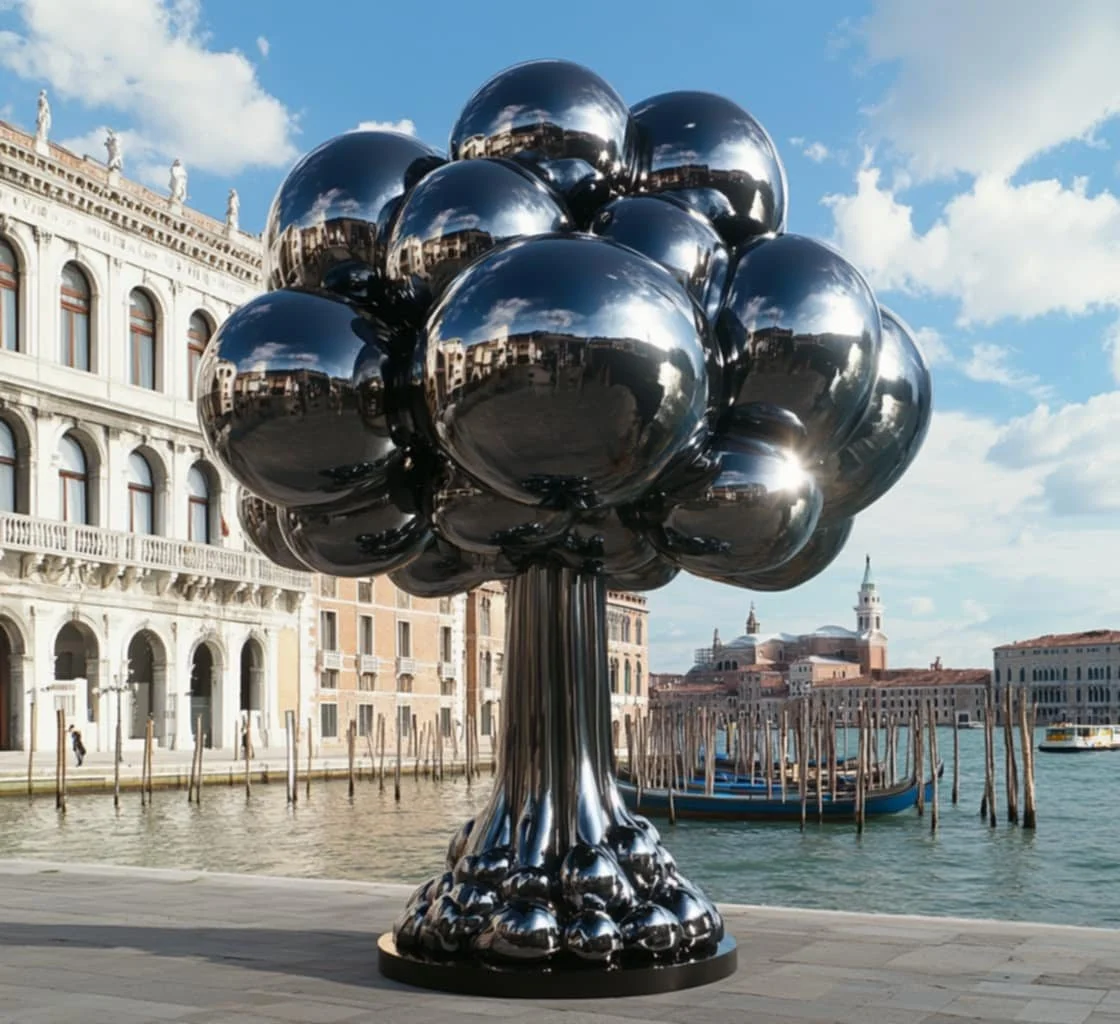
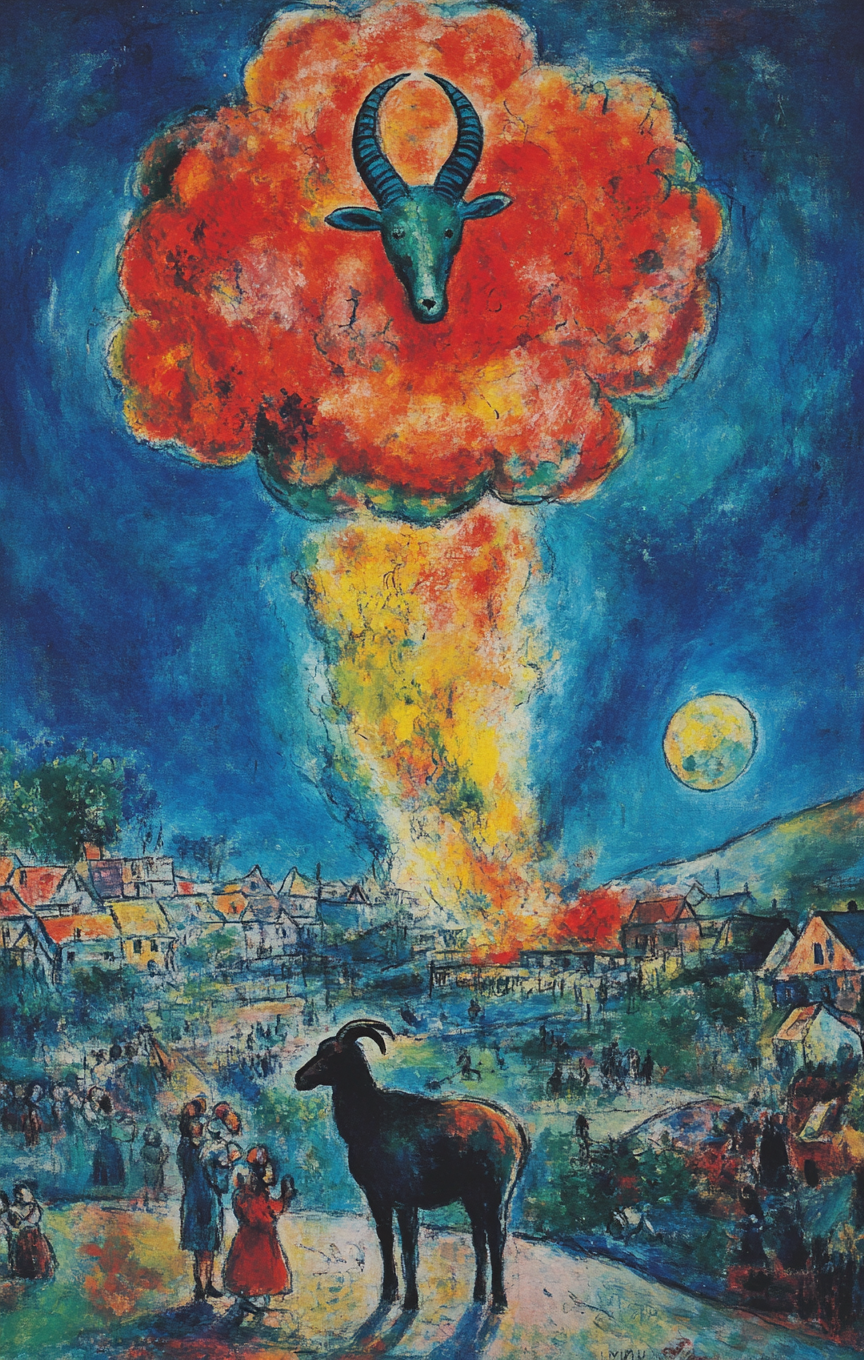
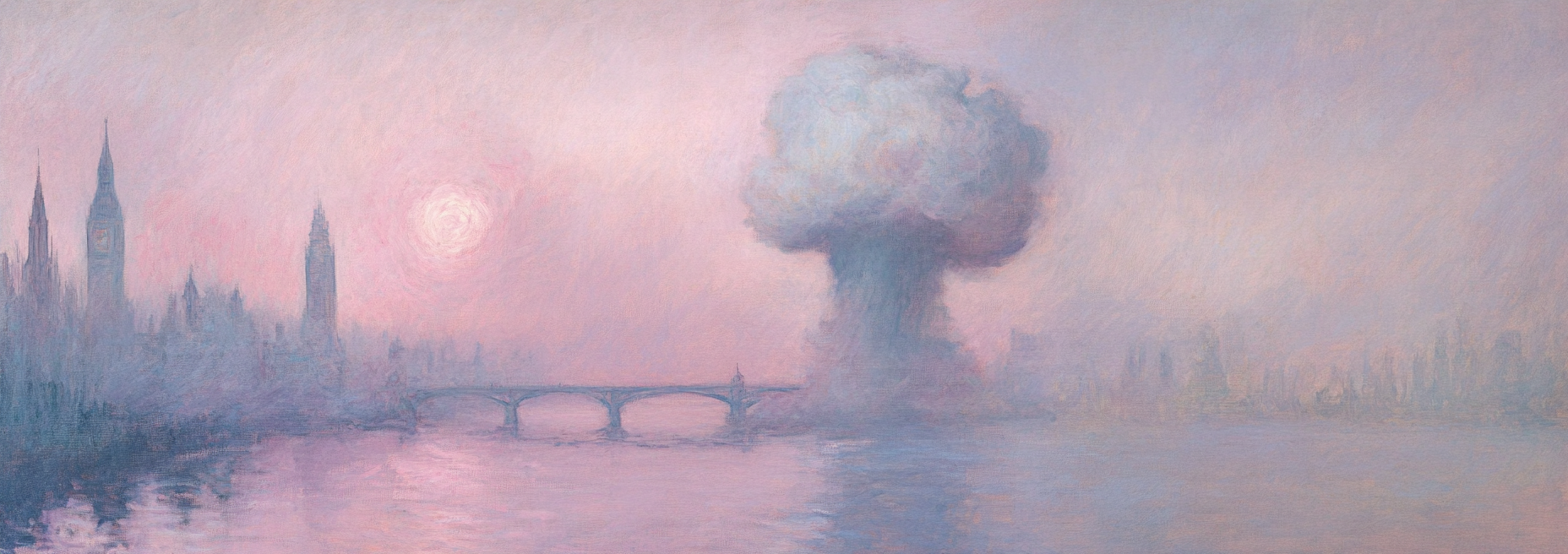
The essence of the project “First of All, It’s Beautiful” is to bring the image of nuclear explosions into every home. It should become a part of interior design—just as the thought of the end of civilization should become part of our worldview. That is why we choose a visual language that is deeply adapted to contemporary culture, turning to forms of art popular with a wide audience: Impressionism, Pop Art, Arte Povera.
The project is presented in the form of an installation composed of various works in different techniques and sizes. All elements of the display are grouped together in the shape of a fairground booth or a tourist kiosk, where the artifacts are piled up on top of each other. This clutter becomes the final exhibition format of the project. The works themselves were created using a special AI platform developed by my team.
It’s not every day that a gallerist becomes an artist. For me, the trigger was the war—or more precisely, Putin’s aggression against Ukraine, which is essentially aggression against the entire world. From the very beginning, when Putin started threatening the world with nuclear war, I realized that he might actually press the red button. But the challenge was that he wanted the world to recognize this threat and be frightened. If I spoke about it directly, I would be playing his game.
After living with this thought for some time, I suddenly realized that civilization is finite—just as every human life is. Whether it's Putin who destroys it, or someone else, is only a matter of time. As Chekhov said: if there is a gun hanging on the wall in the first act, it will inevitably go off in the third. The end of civilization is predetermined—whether through a nuclear explosion, another pandemic, or a meteor strike.
What matters is that people recognize this inevitability, but don’t fear it—instead, they should continue to live. It’s like a child’s first realization of mortality: at the age of ten, a child may first think about death, become frightened, then forget—but later, the thought returns. As we grow, we learn to live with the awareness of life’s finiteness, overcoming the fear of death. Death is a frequent theme in literature, cinema, and is integrated into rituals. Similarly, by accepting the fragility of civilization, we can go on living with purpose—having, in a way, “tamed” the thought.
Marat Gelman